
Book Review: The Trusted Executive by Sc
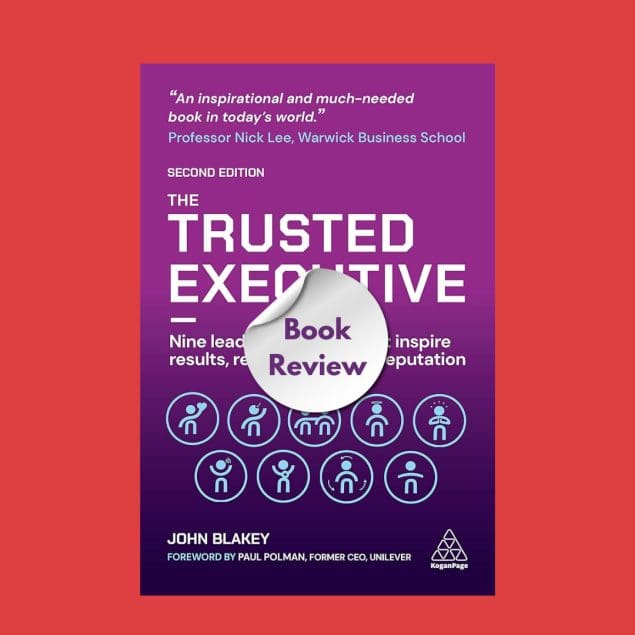
Although originally published in 2016, The Trusted Executive by John Blakey continues to resonate strongly with today’s leadership landscape. In fact, the ideas explored in the book feel even more relevant as organisations navigate increasing complexity, uncertainty, and rapid change.
For professionals working in executive coaching, leadership development, and organisational leadership, Blakey’s work offers valuable insight into the evolving expectations placed on modern leaders. At its core, the book explores a central idea that has become increasingly significant in leadership conversations: trust is now the defining currency of leadership.
Leadership vs Management: Understanding the Difference
Blakey begins by making a clear distinction between management and leadership, stating simply: “Managers manage, leaders anticipate.”
This distinction highlights an important shift in organisational thinking. While managers often focus on maintaining systems and processes, leaders must look ahead, anticipate future challenges, and guide their organisations through uncertainty.
In today’s highly transparent world, where information travels quickly and organisational behaviour is constantly scrutinised, leadership requires a different mindset. Traditional models of leadership that emphasised hierarchy, authority, and purely financial performance are no longer sufficient.
Blakey argues that the traditional single bottom line of maximising profit has evolved into a broader leadership trilogy consisting of:
- Results
- Relationships
- Reputation
These three dimensions shape how organisations operate and how leaders are evaluated. Financial performance remains important, but sustainable leadership success now also depends on how leaders treat people and how organisations are perceived externally.
In this environment, Blakey suggests that trust has become the central leadership agenda.
Leadership Vision and the Importance of “Why”
Another key idea explored in the book is the importance of leadership vision and the ability to communicate purpose effectively.
Blakey draws on the well-known work of Simon Sinek, particularly the concept of starting with “Why.” Leaders who understand and articulate the purpose behind their actions are more likely to inspire commitment, engagement, and alignment within their teams.
For leaders and executive coaches working with senior leadership teams, this insight reinforces the importance of helping leaders move beyond operational thinking and connect their work to a broader purpose.
When leaders can clearly explain:
- Why the organisation exists
- Why a strategy matters
- Why change is necessary
they are better able to influence, motivate, and guide their teams through complex organisational challenges.
This ability to communicate purpose is closely linked to relationship-building and collaboration, both of which are essential elements of effective leadership in modern organisations.
The Three Pillars of Trustworthy Leadership
A central framework in The Trusted Executive is Blakey’s model of three leadership pillars that support trust and long-term organisational success.
These pillars are:
- Ability
- Benevolence
- Integrity
Blakey argues that leaders must demonstrate strength in all three areas if they wish to build trust, sustain organisational performance, and prepare their organisations for the future.
Ability
The first pillar focuses on competence and capability. Leaders must demonstrate the skills, knowledge, and effectiveness required to deliver results.
Within this pillar, Blakey identifies three key leadership habits:
- Coach
- Deliver
- Be Consistent
For those involved in leadership coaching and executive coaching, the inclusion of coaching as a leadership behaviour is particularly significant. It reflects the growing recognition that modern leaders must develop people, not simply direct them.
Integrity
Integrity forms the moral foundation of leadership. Leaders who demonstrate integrity build credibility and trust with their teams, stakeholders, and wider society.
Blakey highlights three habits associated with integrity:
- Be Honest
- Be Humble
- Be Open
These behaviours reinforce the importance of transparency and authenticity in leadership. In a world where organisational behaviour is increasingly visible, leaders who lack integrity risk damaging not only their own credibility but also the reputation of the organisations they represent.
Benevolence
The third pillar, benevolence, focuses on a leader’s intention and concern for others. Leaders who genuinely care about people are more likely to create environments of psychological safety, engagement, and collaboration.
Blakey associates three leadership habits with benevolence:
- Evangelise
- Be Brave
- Be Kind
These behaviours highlight the importance of courage, empathy, and advocacy in leadership. Leaders must be willing to champion ideas, support their teams, and make difficult decisions when necessary.
Interestingly, while the three pillars themselves are expressed as nouns, Blakey deliberately describes the associated habits as verbs. This choice reflects his emphasis on leadership as a practice rather than a theory.
Leadership, in this model, is something leaders actively do, not simply something they possess.
A Valuable Resource for Executive Coaches
Blakey’s work offers valuable insights for professionals working in executive coaching, leadership coaching, and organisational development.
Through real-life scenarios, research references, and practical examples drawn from his own experience, Blakey explores how leaders can build credibility, influence teams, and strengthen organisational culture.
For coaches working with senior leaders, the book highlights several important themes, including:
- Encouraging leaders to take ownership and accountability
- Supporting leaders in navigating complex organisational systems
- Helping leaders understand their sphere of influence
- Strengthening resilience and courage in leadership
- Developing self-awareness and reflective practice
These themes align closely with the goals of executive coaching, which often focuses on helping leaders step back from daily operational pressures and reflect on how their behaviour, decisions, and leadership style impact others.
Trust as the Foundation of Modern Leadership
Ultimately, The Trusted Executive reinforces a central message: trust sits at the heart of effective leadership. In a world characterised by volatility, complexity, and heightened expectations of organisational responsibility, leaders must go beyond technical competence. They must demonstrate integrity, empathy, and the ability to build meaningful relationships.
For organisations seeking sustainable success, trust is no longer optional. It is fundamental to leadership credibility, organisational reputation, and long-term performance. For coaches supporting leaders in navigating these challenges, Blakey’s framework provides a useful lens through which to explore leadership behaviour and organisational culture. Although written several years ago, The Trusted Executive remains highly relevant for today’s leaders and executive coaches working in leadership development. By focusing on ability, benevolence, and integrity, Blakey offers a practical framework for understanding how leaders can build trust, strengthen relationships, and deliver sustainable results. For coaches supporting leaders in complex organisational environments, this book serves as a reminder that effective leadership is not simply about authority or expertise. It is about earning trust through consistent behaviour, clear purpose, and genuine care for people.
Virginia Raymond, Faculty Member
February 2026