ILM Level 5 vs Level 7 Coaching Qualification: Which Coaching Qualification Is Right for You?
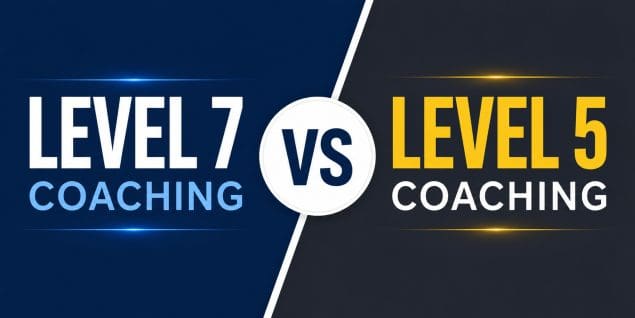
Understanding the Difference Between ILM Level 5 and ILM Level 7 Coaching Qualifications
Choosing the right coaching qualification is one of the most important decisions for aspiring and experienced coaches. Two of the most respected coaching qualifications in the UK are the ILM Level 5 Coaching and Mentoring Qualification and the ILM Level 7 Executive and Senior Level Coaching and Mentoring Qualification.
Both qualifications are highly regarded by employers, organisations and coaching professionals. However, they are designed for different levels of experience, different coaching contexts and different career aspirations.
In this guide, we explore the key differences between ILM Level 5 and ILM Level 7 coaching qualifications to help you decide which programme is right for you.
What is the ILM Level 5 Coaching and Mentoring Qualification?
The ILM Level 5 Coaching and Mentoring Qualification is designed for managers, leaders, HR professionals, learning and development practitioners, internal coaches and individuals looking to develop professional coaching skills. The programme focuses on developing practical coaching and mentoring capability while building confidence in applying coaching models, tools and techniques in workplace settings.
Learners typically use coaching to:
- Support personal development
- Improve performance and engagement
- Enhance leadership capability
- Develop coaching cultures within organisations
- Build a foundation for a professional coaching practice
Level 5 is often considered the ideal qualification for individuals who are either new to coaching or looking to be an internal coach.
What is the ILM Level 7 Executive and Senior Level Coaching Qualification?
The ILM Level 7 Executive and Senior Level Coaching and Mentoring Qualification is a Master’s-level coaching qualification designed for experienced coaches, senior leaders, consultants and professionals using coaching/mentoring with executives and senior stakeholders. The programme explores coaching at greater depth, encouraging critical thinking, reflective practice, supervision and a deeper understanding of coaching theory and organisational dynamics.
Learners develop the capability to coach:
- Senior leaders
- Executives
- Directors
- Business owners
- Strategic decision-makers
- High-performing professionals
Level 7 is often considered the ideal qualification for individuals who have existing coaching experience, formal or informal, looking to establish themselves as executive coaches, freelance coaches etc.
ILM Level 5 vs Level 7: Key Differences
1. Qualification Level
ILM Level 5: Equivalent to a foundation degree or higher education diploma level. Designed for developing practical coaching competence and confidence.
ILM Level 7: Equivalent to postgraduate or Master’s-level study. Designed for coaches seeking advanced coaching capability and deeper theoretical understanding.
2. Coaching Context
ILM Level 5: Typically focuses on coaching within operational, management and team environments.
ILM Level 7: Focuses on executive, strategic and organisational coaching contexts.
3. Depth of Learning
The Level 5 qualification develops strong practical coaching skills and introduces coaching theory and models. The Level 7 qualification goes significantly deeper, requiring learners to critically evaluate coaching approaches, explore coaching psychology, examine ethical practice and reflect on coaching at a professional level. Learners are expected to engage with academic literature, research and evidence-based coaching practice.
4. Coaching Experience Requirements
Many learners join a Level 5 programme with little or no formal coaching experience. By contrast, Level 7 learners often have existing coaching, leadership, mentoring or consulting experience and are looking to advance their professional practice. While prior coaching qualifications are not always mandatory, the Level 7 programme requires learners to operate at a more advanced level of critical thinking and reflection.
5. Professional Development and Career Goals
The right qualification often depends on your long-term coaching goals.
Level 5 may be suitable if you want to:
- Develop coaching skills as a leader
- Coach colleagues and team members
- Introduce coaching into your organisation
- Build confidence as a coach
- Gain a recognised coaching qualification
Level 7 may be suitable if you want to:
- Coach executives and senior leaders
- Build a professional coaching practice
- Work as an executive coach
- Develop advanced coaching expertise
- Strengthen your credibility within the coaching profession
- Gain a recognised coaching qualification
Which Coaching Qualification Is More Respected?
Both qualifications are highly respected and recognised internationally through the City & Guilds ILM. Neither qualification is “better” than the other. Instead, they serve different purposes. A Level 5 qualification demonstrates professional coaching competence and is highly valued within organisations. A Level 7 qualification demonstrates advanced coaching capability and is often associated with executive coaching, senior leadership development and professional coaching practice. The most appropriate qualification depends on your experience, aspirations and coaching context.
Should You Choose the Certificate or Diploma?
Both Level 5 and Level 7 programmes are typically available as either a Certificate or Diploma. The main difference is the amount of coaching practice required. The Certificate route is often preferred by busy professionals seeking a recognised coaching qualification while balancing work and personal commitments. The Diploma route requires significantly more coaching practice and is often chosen by those building a substantial professional coaching portfolio. Both routes carry strong professional recognition and credibility.
When comparing ILM Level 5 vs Level 7 Coaching Qualifications, the question is not which qualification is better, but which qualification is right for you. If your goal is to develop professional coaching skills for management, leadership or organisational coaching, the ILM Level 5 Coaching and Mentoring Qualification provides an excellent foundation. If your ambition is to coach senior leaders, executives and organisational decision-makers, the ILM Level 7 Executive and Senior Level Coaching and Mentoring Qualification offers a more advanced, Master’s-level pathway.
Whichever route you choose, investing in a recognised coaching qualification is an investment in your professional credibility, confidence and future impact as a coach.
If you are unsure which qualification best suits your experience, career goals or coaching aspirations, we would be delighted to help. Contact the British School of Coaching for a free, no-obligation consultation with a member of our team. We can talk through your background, answer your questions and help you identify the most appropriate pathway for your coaching journey.
Internal Links: